

The Hidden Geometry of Oversized Clothing: Why Going Up Two Sizes Doesn't Always Work
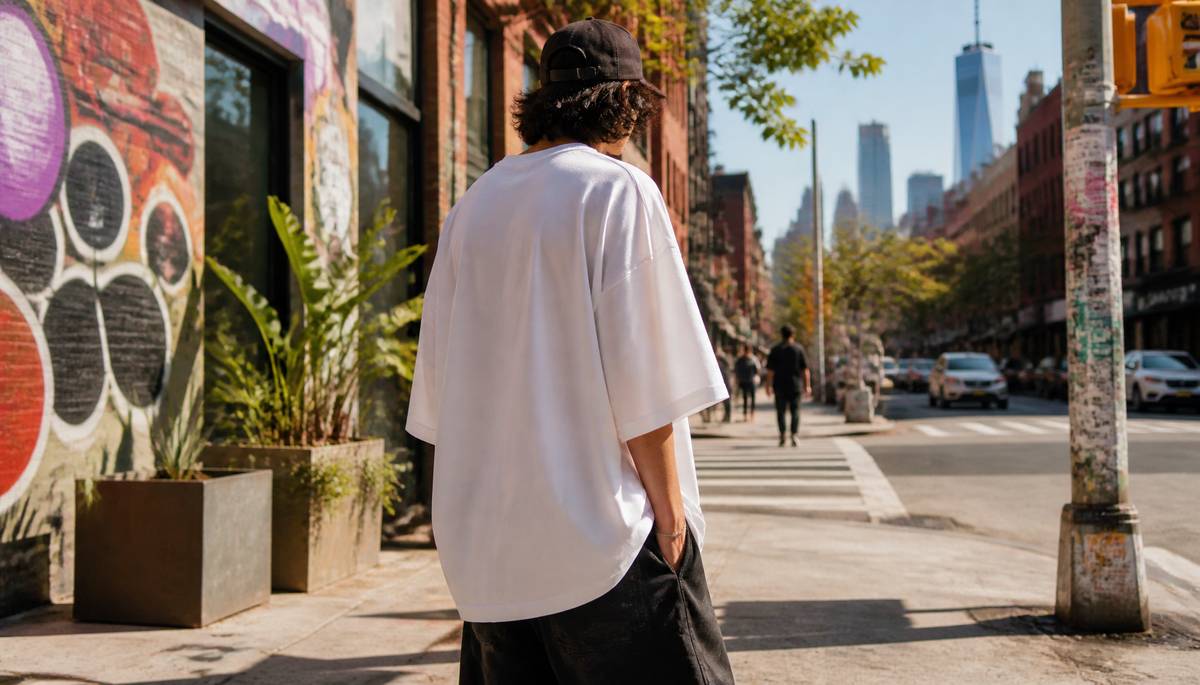 A T-shirt can make someone look effortlessly stylish or resemble a child who has raided a professional basketball player's wardrobe. The difference isn't necessarily the amount of fabric involved. It's where that fabric sits, how it hangs, and whether the garment was designed to be oversized in the first place.
Oversized clothing has become a defining feature of contemporary streetwear, offering comfort, freedom of movement and a deliberate departure from closely fitted silhouettes. Yet one of the most common mistakes is assuming that buying a garment two or three sizes larger will automatically produce the desired appearance.
Unfortunately, clothing doesn't work quite like enlarging a photograph. Increasing every measurement simultaneously can produce some surprisingly unfortunate results.
Why Bigger Doesn't Automatically Mean Better
The fundamental distinction between oversized clothing and ordinary clothing purchased in a larger size lies in the garment's proportions.A genuinely oversized T-shirt might feature an unusually wide body, deliberately lowered shoulder seams and generous sleeves while maintaining a carefully controlled overall length. These measurements work together to create a particular silhouette.
A standard T-shirt purchased three sizes too large, however, increases almost everything proportionally. The neckline becomes wider, the body grows longer, the sleeves extend further down the arms, and the shoulders may end up somewhere around the elbows.
Rather than looking intentionally relaxed, the wearer can appear to have borrowed clothing from a considerably larger relative who has no immediate plans to ask for it back.
The distinction matters because oversized fashion is fundamentally about shape rather than size. Designers manipulate individual dimensions to achieve a balanced appearance, rather than simply scaling up an existing pattern.
Shoulder Seams and the Illusion of Width
Shoulder construction plays an especially important role in determining how oversized clothing looks.Traditional fitted garments position their shoulder seams close to the natural shoulder joint. Oversized streetwear frequently uses dropped shoulders, placing these seams further down the upper arm.
This creates a broader, softer silhouette without necessarily requiring excessive fabric throughout the entire garment.
However, the degree of shoulder drop matters. A modest drop can create a relaxed, contemporary appearance, while an extreme drop may cause the upper body to look disproportionately wide.
For people with naturally broad shoulders, a controlled drop can soften the outline. Those with narrower shoulders may benefit from a slightly more structured shoulder arrangement that preserves some definition.
Sleeves Can Make or Break the Silhouette
Sleeve proportions are another overlooked element of oversized clothing.On a well-designed oversized T-shirt, sleeves often extend towards the elbow, with enough width to maintain a loose, comfortable shape. Their length and circumference are deliberately coordinated with the garment's body.
Simply increasing the size of a conventional T-shirt can produce sleeves that are both excessively long and awkwardly shaped.
The result may resemble someone preparing to conduct an orchestra while simultaneously concealing a pair of small household appliances.
Sleeve openings also influence the overall impression. Wider openings generally reinforce the relaxed streetwear aesthetic, while narrower openings can create an uncomfortable contrast with an otherwise generous body.
Length Is Where Proportions Get Personal
Garment length deserves particular attention because it affects how the upper and lower body appear in relation to one another.An oversized shirt that finishes around the hips can create a balanced, boxy silhouette. One that extends substantially below the hips may visually shorten the legs, especially when combined with loose trousers.
Height, torso length and leg proportions all influence the ideal measurement.
Shorter wearers often benefit from boxier garments with controlled lengths, while taller individuals may find that slightly longer cuts maintain better visual balance.
The objective isn't to follow a universal measurement. It's to find a length that complements the wearer's proportions while preserving the intended relaxed appearance.
Fabric Structure Changes Everything
Two oversized T-shirts with identical measurements can look remarkably different depending on their fabric.Lightweight cotton tends to drape closely around the body, creating a softer, flowing appearance. Heavier cotton, particularly fabrics used in structured streetwear, holds its shape more effectively and produces a distinctive boxy silhouette.
This difference becomes especially noticeable around the shoulders, chest and hem. A heavyweight T-shirt can maintain its width without collapsing against the torso, while a thinner garment may simply hang downwards.
Neither approach is inherently superior. Lightweight materials work well for relaxed summer outfits, while structured fabrics provide greater definition and often complement minimalist streetwear.
Fabric recovery matters too. A garment that stretches excessively during wear may gradually lose its intended proportions. Nobody wants a carefully chosen oversized T-shirt transforming into a medieval tunic by lunchtime.
Finding the Right Fit for Different Body Shapes
Oversized clothing can complement practically any body shape, provided the proportions are chosen thoughtfully.People with broader builds may prefer garments that offer additional room through the chest and waist without introducing unnecessary length. A structured fabric can create a clean outline rather than clinging to individual contours.
For slimmer individuals, boxy cuts can introduce visual width and create a stronger silhouette. However, excessively large garments may overwhelm a narrow frame, particularly when the sleeves and neckline are disproportionately generous.
Those with shorter torsos might find cropped oversized designs particularly effective. These garments provide width without extending too far below the waist.
The most useful approach is to examine how the clothing relates to the body rather than concentrating on the size printed inside the collar.
That label is useful information, not a legally binding assessment of personal identity.
Balancing Oversized Tops With Trousers
The relationship between upper and lower garments is essential to creating a coherent streetwear outfit.An oversized T-shirt paired with straight-leg trousers often produces a balanced appearance, combining generous proportions above with a more controlled silhouette below.
Wide-leg trousers can also work extremely well, particularly when the shirt has a structured, boxy shape. The key is ensuring that the overall outfit maintains some visible definition.
Footwear contributes to this balance. Chunkier trainers can visually anchor wider trousers, while slimmer shoes may complement outfits with more restrained proportions.
Experimenting with different combinations is worthwhile. Sometimes changing the trousers achieves more than purchasing another oversized shirt.
Trying Before Buying and Measuring What Matters
When shopping for oversized clothing, garment measurements are considerably more reliable than conventional size labels.Pay particular attention to chest width, shoulder width, sleeve length and total garment length. Compare these measurements with an existing item that fits comfortably.
When trying clothing on, raise your arms, sit down and move naturally. The garment should remain comfortable without constantly shifting into awkward positions.
Check the neckline too. Excessively wide collars can make an otherwise attractive garment look stretched or poorly fitted.
Online shoppers should examine product measurements rather than assuming that a model wearing an extra-large shirt provides meaningful guidance for everyone else.
Giving Oversized Fashion Some Room to Breathe
Successful oversized dressing involves deliberate choices about width, length, structure and movement. The most effective garments provide freedom without allowing excess fabric to dominate the entire outfit.There is no requirement for every item to be oversized, nor should comfort demand the abandonment of proportion.
A carefully selected oversized garment can feel relaxed while still appearing considered and distinctive. Ultimately, the goal is clothing that looks intentionally generous rather than accidentally enormous.
After all, making room for personal style shouldn't require making room for three additional people inside the same T-shirt.
Article kindly provided by loaybrand.be
Latest Articles
- The Hidden Geometry of Oversized Clothing: Why Going Up Two Sizes Doesn't Always Work
- When the Location Is Wearing the Clothes Too: Choosing Backdrops That Strengthen a Fashion Story
- How to Choose a Martial Arts Uniform That Moves With You
- From Shop Floor to Storyboard: What Retail Spaces Can Teach Fashion Photographers
- The Quiet Luxury Test: How to Tell When Design Is Doing the Talking
- Using Location as a Fashion Storytelling Tool
- Why Modern Style Is Becoming More Regional Instead of Global
- How Small Communities Quietly Became the Biggest Driver of Custom Clothing Culture
- How Climate Should Influence Your Wardrobe More Than Style Trends
- The Fit Illusion: Why Two Identical Sizes Can Feel Completely Different
- Micro-Fragrance Wardrobes: Why Owning 5 Small Bottles Can Beat 1 Big Signature Scent
- Why Your Wardrobe Feels Wrong Even When It Looks Good
- Capturing Real Emotion Without Telling Anyone to Smile
- Fashion Forward: Emotional Storytelling in Technical Cultures
- The Psychology of Tattoo Aesthetics: Why Certain Imagery Resonates
- Style That Works With Your Body, Not Against It
- Fashion Tourism on Wheels: Curated Shopping Routes Led by Chauffeur Guides
- The Charm of Certainty in a World of Indecision
- Can an Everyday T-Shirt Be Turned into a Modern Heirloom?
- Color, Ceremony, and the Psychology of Celebration
- Accessories
- Jewellery
- Footwear
- Skirts and Dresses
- Shirts and Blouses
- Beauty and Makeup
- Fashion Photography
- Sustainable Fashion
- Street Style
- Fashion History
- Fashion Business
- Fashion Styling
- Fashion Events
- Plus-Size Fashion
- Men's Fashion
- Women's Fashion
- Fashion Blogging
- Fashion Trends
- Fashion Retailers
- Fashion Tips and Advice
- Fashion Business Startups
- Fashion Around the World
- Lingerie
- Sportswear
- Weddings